Choose Use Circulate
Improving on the original:
A mission to “foster new habits” for a future free of waste.
Disposable hygiene products have long contributed to convenient and sanitary lifestyles. The question now is: how can we reduce their environmental impact without compromising the value they provide?
Currently, Unicharm is addressing this challenge through our core principles: “Choose. Use. Circulate.” Our goal is to fundamentally redefine the conventional wisdom that hygiene products are destined for disposal.
One of these initiatives is the RefF Project*1, which embraces the challenge of “horizontal recycling”—transforming used disposable pants (diapers) back into brand-new ones. We spoke with the key figure behind this project, Kuniyoshi Kawabata of the Recyclce Business Development Department, about the origins of this mission to create a “waste-free” future and his vision for what lies ahead.
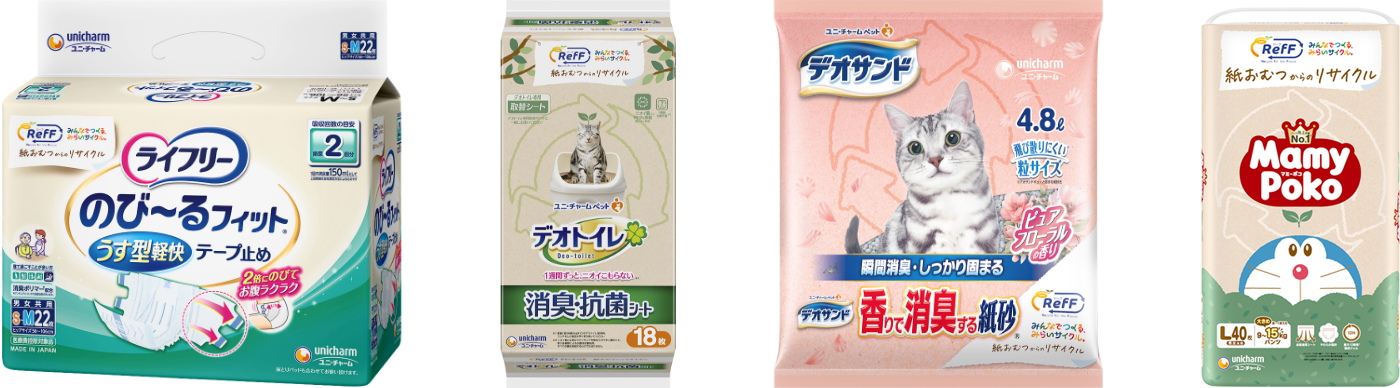
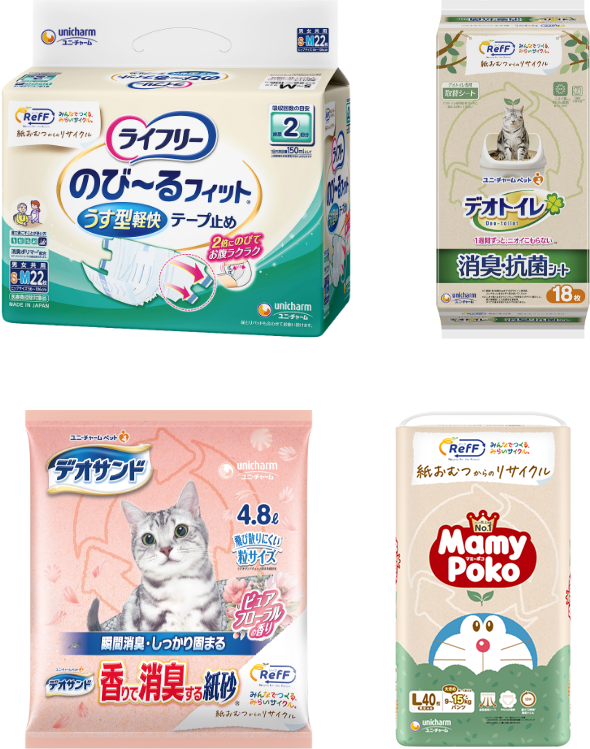
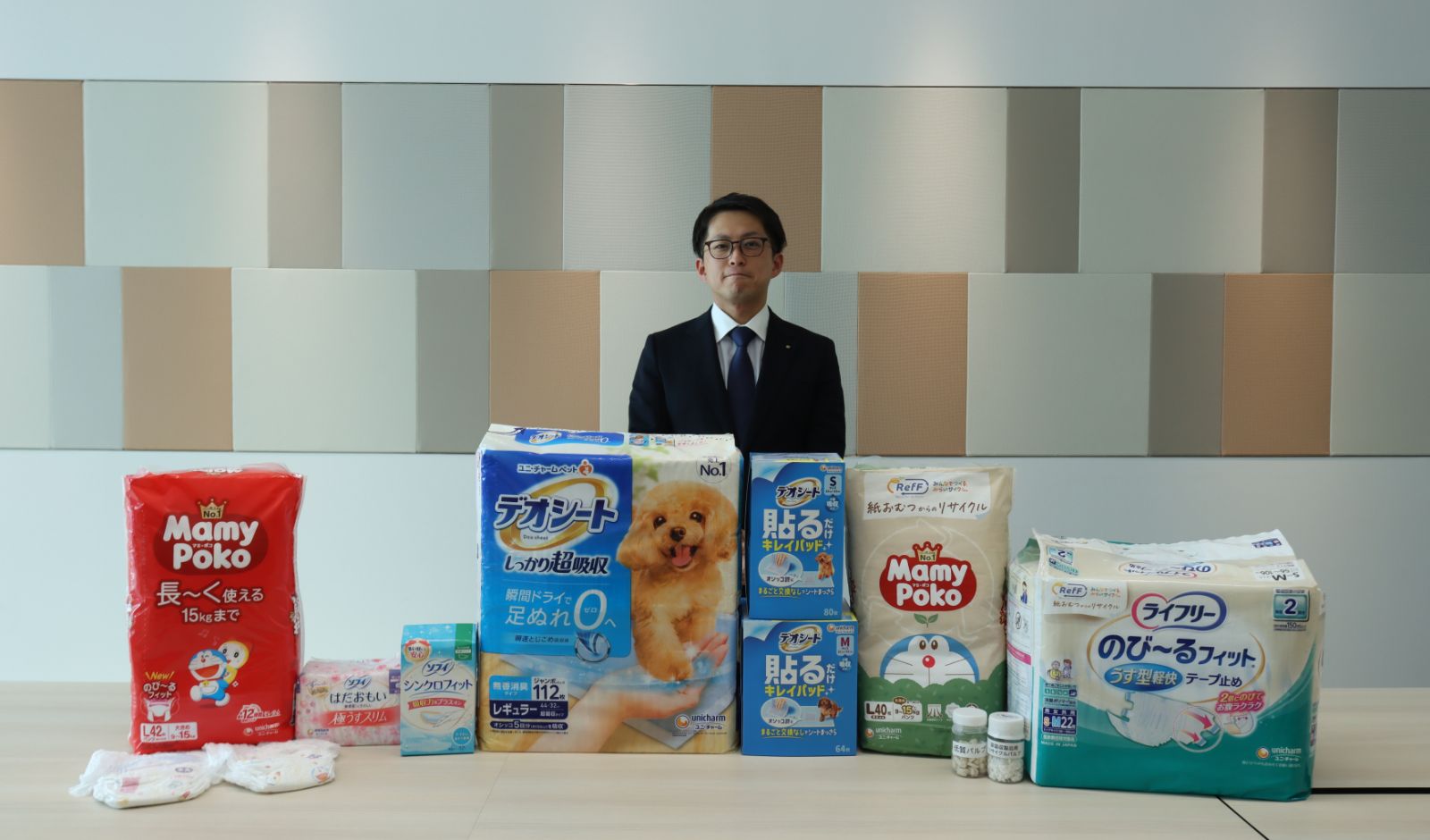
Various RefF products
- *1 RefF Project
This project employs a globally unprecedented*2 “horizontal recycling” method. Through a unique ozone treatment process, used disposable diapers are washed, sterilized, and bleached, then reprocessed into pulp that rivals the quality of a new material. - *2 Horizontal recycling technology that utilizes ozone treatment to transform used disposable diapers back into high-quality, usable diapers. (Based on in-house research by Unicharm, December 2020)
Why are “Choose, Use, and Circulate” so essential now?
Could you tell us the background behind the growing demand for sustainability in hygiene products? What is driving the sense of urgency?
Our company has made the realization of the SDGs one of its core missions. To this end, we are working to strike a balance between addressing social issues and achieving business growth. Looking back, we entered the feminine care business in response to the social issue of facilitating women’s advancement in society.
In addition, the growth of our disposable diaper business was in response to the needs of an aging society. We have a long history of linking business growth to addressing social issues.
Meanwhile, products built on the premise of being “disposable” are no longer suited to the needs of our time. Moving forward, it is essential to establish systems that achieve resource recycling while maintaining high product quality.
Sustainable habits can be difficult to establish in this field due to hygiene and functionality concerns. What was the goal behind introducing “Choose, Use, and Circulate” as a new approach?
While hygiene products have made life cleaner and more convenient, they have also created a social issue: an increase in waste. Due to the aging of society, the proportion of disposable diapers in combustible waste is increasing year by year, and the resulting increase in CO2 emissions during incineration and the burden of waste disposal are serious concerns.
Having been involved in the product development of adult disposable diapers and observing caregiving settings myself, I believe that adult disposable diapers are essential for improving the quality of life for both the individual and their caregiver, while, at the same time, representing a significant societal impact for which our company holds a deep responsibility.
Our goal is to reduce environmental impact and contribute to a sustainable society while maintaining customer convenience. We are addressing this through our “Choose, Use, and Circulate” framework.
We encourage customers to “Choose” sustainable products, “Use” them in ways that minimize waste, and “Circulate” those resources through the recycling efforts of the RefF Project.
Building this system is a new challenge we are tackling.
The pride and dignity inherent in our products: Navigating conflicting priorities
I imagine there was some conflict in balancing the absolute requirement of “not compromising on functionality at all” with environmental considerations. Specifically, what kind of professional pride did you uphold while tackling this challenge?
Simply reducing resource consumption is easy, but customers might perceive it as a drop in quality. We believe it is possible to enhance product value while simultaneously reducing our environmental footprint.
The RefF Project utilizes recycled pulp (RefF pulp) while ensuring the same level of quality as conventional products. Additionally, we have reduced the amount of ink used in our packaging by collaborating closely with our development and marketing departments to design eco-friendly products.
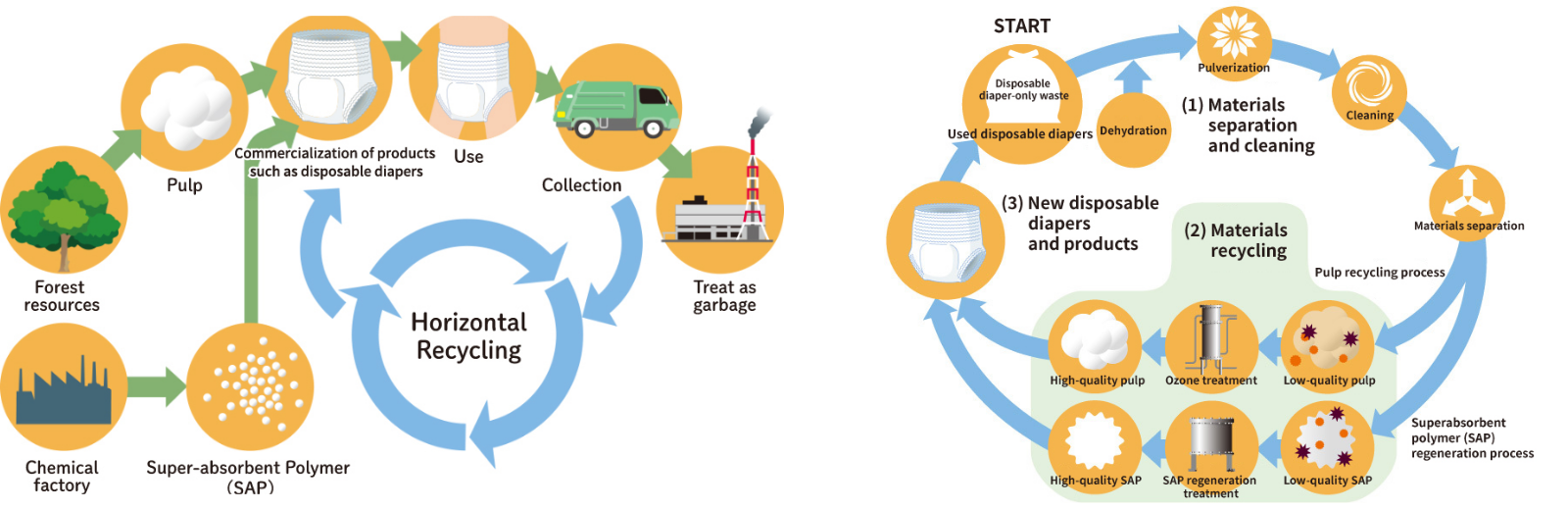
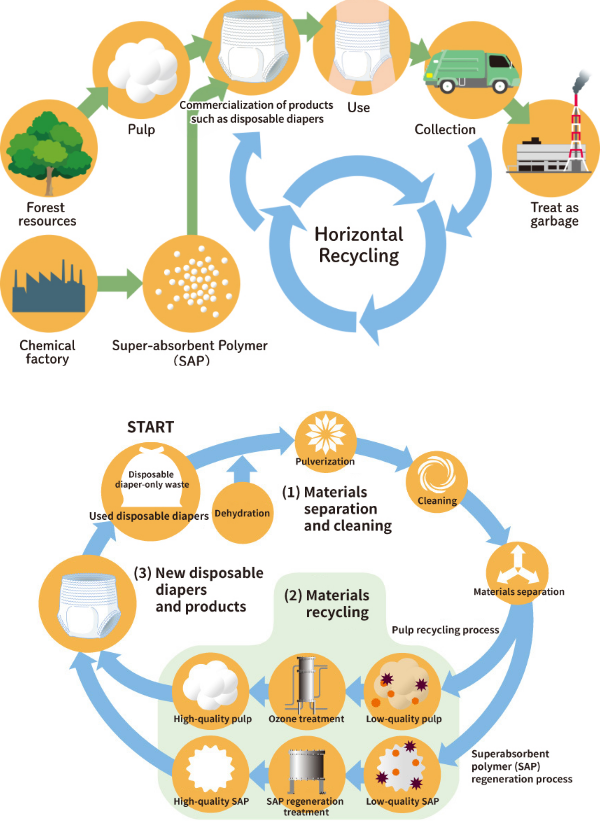
This image illustrates the mechanism in the RefF Project for recycling pulp using ozone treatment. Unicharm’s proprietary ozone treatment process ensures that used disposable diapers are hygienic and safe enough to be reused as raw material for disposable diapers.
What challenges do you face in gaining consumer acceptance for the “Choose, Use, and Circulate” concept, and what is the key to shifting their mindsets?
A 2024 in-house survey titled “Daily Necessities and Sustainability: Awareness and Behavior” revealed that approximately 70% of respondents “want to act sustainably but are unsure of what steps to take.”
In short, while many people are environmentally conscious, they lack clear, actionable guidelines. To address this, under the “Choose” pillar, we offer guidance on selecting sustainable products, and under “Use,” we provide practical ways to maximize their utility.
Choose
= Suggestions for selecting products that contribute to reducing environmental impact
Use
= Suggestions for reducing material usage
Circulate
= Participation in resource recycling through resource recovery
For example, by choosing the “Deo-Toilet” system, you can reduce waste by approximately 52% compared to using conventional clumping litter.*3
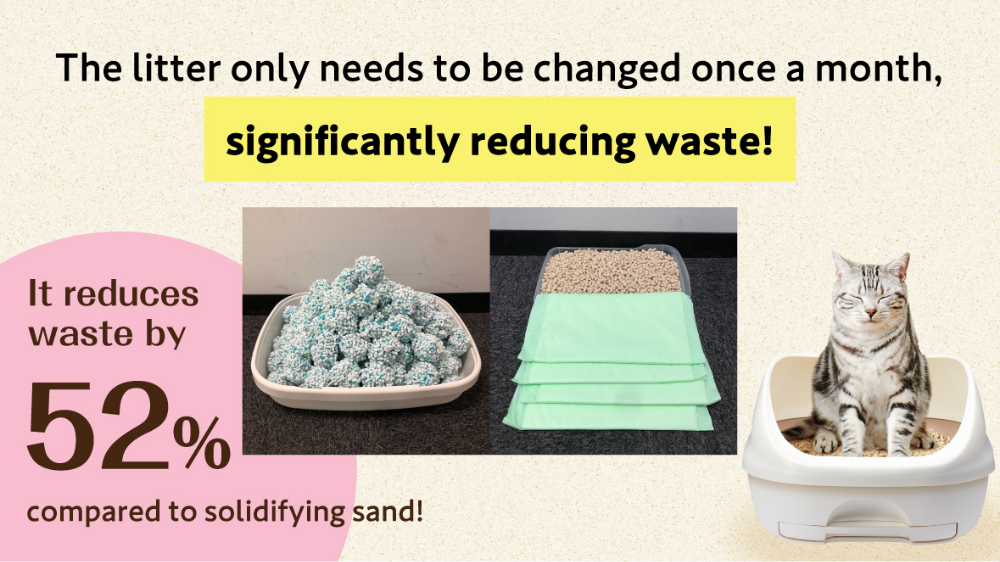
*3 Comparison with Unicharm’s clumping-type litter, based on the weight of waste generated over a one-month period.
(Unicharm in-house research)
Furthermore, by “Using” Lifree Thin Lightweight Pants in combination with Lifree No-Slip Urine Pads, you can reduce waste by approximately 20%.
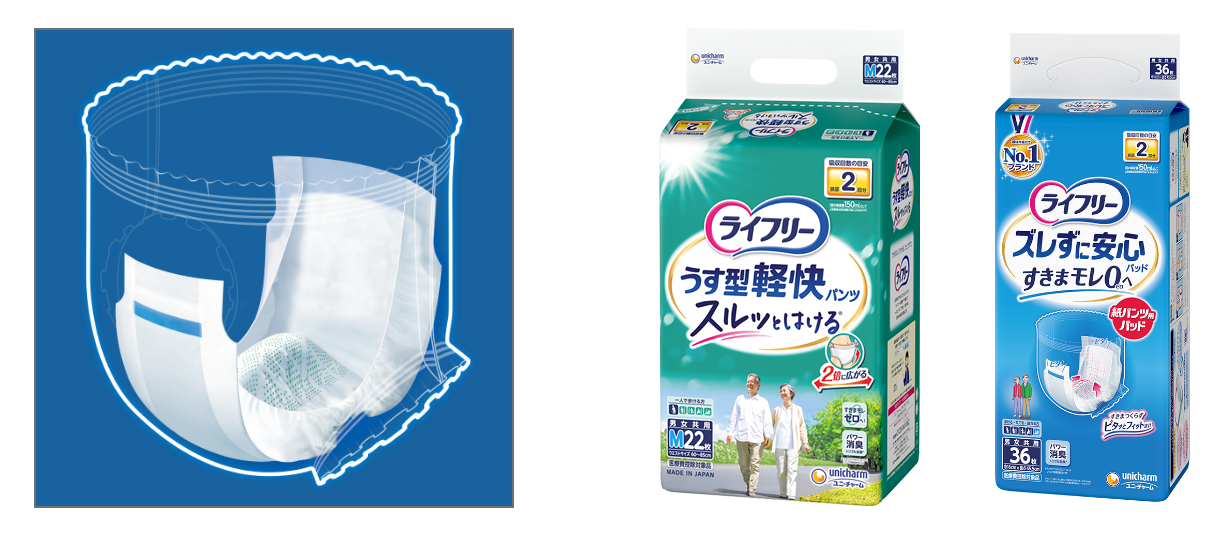
Regarding “Circulate,” we aim to provide more opportunities for customers to engage with RefF brands, enabling them to participate in a circular economy effortlessly.
We believe there should be no trade-off between convenience, cost-effectiveness, and sustainability.
The Deeper Significance of “Circulate”: Responsibility for the Future
As a consumer goods manufacturer, establishing a system to “circulate” products is a major undertaking that fundamentally transforms the existing business model. Could you tell us more about the significance of this shift?
Naturally, a product must perform well, but it must also address societal challenges—such as those in feminine care, childcare, nursing care, and pet care—while simultaneously reducing environmental impact.
Improving product functionality with limited resources is no easy task. Furthermore, the mission to tackle these complex social issues presents significant challenges.
Specifically, since disposable diapers are now the standard, “circulating” them requires not only advanced recycling technology but also active consumer participation in waste sorting.
I believe that by sharing this vision of building the future together, we can move closer to realizing a truly inclusive society.
As you tackle the challenges of RefF, what do you envision becoming the “new normal” five to ten years from now, or even further into the future?
Our corporate brand essence, “Love Your Possibilities,” reflects our belief in the limitless potential (Possibilities) within every person (Your). We strive to realize a symbiotic society where people support one another by unleashing that potential with a spirit of altruism and Love.
I hope to foster a society where people naturally lead rich and vibrant lives through the “circulation” of the Earth’s limited resources.
Personally, considering that manufacturing for any product is based within a global supply chain, I believe it’s essential to cultivate an appreciation for “circulation” by recognizing the benefits we receive… and by maintaining a deep sense of gratitude for everyone involved.
The “RefF Project” is not something that can be accomplished alone; it can only be realized through cooperation and collaboration among many people.
We aim to create a society where people live with consideration for others—including family, friends, and future generations—leading lives that are fulfilling in both mind and body.
Profile of Kuniyoshi Kawabata
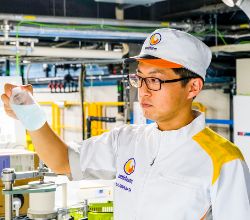
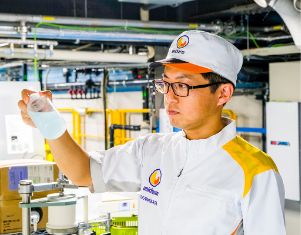
Kawabata serves as Chief Technologist in the Recycle Business Development Department. He volunteered to join the RefF Project in 2022 and has been a key member of the team ever since.
Currently, he oversees a wide range of responsibilities, from developing technologies to reclaim pulp, superabsorbent polymers (SAP), and plastics from used diapers, to ensuring product quality and establishing sales channels for raw materials.